Most gemstones have been known about for centuries, some for millenia, so there is rich folk lore and tradition surrounding most of them. The exception is Tanzanite, which was first discovered in 1967 near mount Kilimanjaro in Tanzania. It is the only place where the gemstone is found, and it is named after the country in Africa where it is found.
It was first marketed by Tiffany and Company in New York City. It was first given the name blue zoisite as it is a variety of the mineral zoisite, but Tiffany changed it to Tanzanite because they thought it would help it sell better. For ten years Tiffany had the exclusive rights to the stone, but in the 1970's the Tanzania government nationalized the mines, and now the government restricts the export of rough Tanzanite stones. There are other entities that own parts of the mines and the supply of the gemstone is strictly controlled, thus the price has rose steadily over the years.
The color of Tanzanite can range from purple to blue. The rough stone is usually a reddish brown, and the rough stones are heat-treated to bring out the blue color. Almost all Tanzanite is heat treated at more than 900 degrees Farenheit and heat treatment has no affect on the value of the stone. The best quality stones range in color from ultramarine blue to sapphire blue with the most popular color being saturated blue which shows a purplish tint to it. It is a relatively soft stone, and scratches more easily than many other gemstones. Care in wearing it and cleaning it is required. In 2002 The American Gem Trade Association announced the Tanzanite has joined Turquoise and Blue Topaz as their birth stones for December.
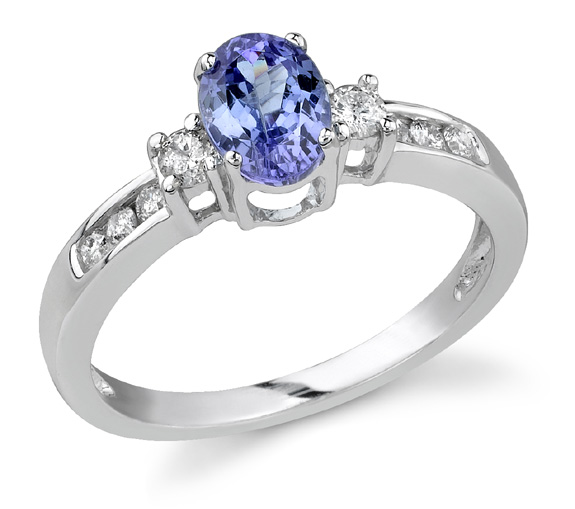
Tanzanite has a rare property not found in most gems. When looked at in different light and at different angles it can appear to change color. From blue to violet to purple, some stones even show the colors dark red and gray. Tanzanite is usually clear with few inclusions. Stones with cracks or bubbles should be avoided as these could break.
Tanzanite is a beautiful stone, and considering it is found in only one 5-mile square place on earth, it is by its nature a rare gem that will only get rarer. But it continues to be a popular stone, and has made its mark in the world of gemstones in a very short time.
Tanzanite Jewelry
Saturday, March 27, 2021
Wednesday, November 17, 2010
Marcasite - Pyrite in Disguise
Marcasite as the word is used in jewelry refers to small faceted stones that are inlaid in sterling silver. But the actual mineral marcasite cannot be used in jewelry as it tends to crumble into powder. Marcasite jewelry is actually jewelry using the mineral pyrite, sometimes referred to as iron pyrite.
Pyrite as it occurs in nature has a metallic luster, and can range from a very pale to a brassy yellow color according to the sulfur content. The yellow colored pyrite was mistaken for gold by inexperienced miners and earned the name fool's gold. These miners of years ago didn't realize it at the time, but pyrite can actually have very small amounts of gold in it. The sulfur content of the mineral has led pyrite to be used commercially for the production of sulfur dioxide used in the paper industry, and sulfuric acid for many industrial applications. Pyrite is found in many areas around the world
Pyrite used in jewelry is called marcasite. The name is derived from the Arabic word for pyrite, 'markaschatsa'. Evidence of this type of jewelry has been found in areas of ancient Greece and the burial grounds of the ancient Inca people of South America. It became very popular in the 18th century, reaching its zenith in the Victorian Era.
Marcasite is most often used with sterling silver. The darkness of it makes a good contrast to the brightness of silver. Gemstones are also used with it to good effect. Even when new, it has an antique look to it, and is used in Victorian Era jewelry reproductions. It is also used in many other kinds of jewelry. It can range in color from slightly brassy to pale green, but is mostly a dark metallic gray color.
From a simple marcasite and sterling silver ring, to ornate pendants with brightly colored gemstones, it is a very versatile material. This type of jewelry is found in very affordable jewelry right on up to very expensive. It has its own charm and beauty, this pyrite in disguise.
Pyrite as it occurs in nature has a metallic luster, and can range from a very pale to a brassy yellow color according to the sulfur content. The yellow colored pyrite was mistaken for gold by inexperienced miners and earned the name fool's gold. These miners of years ago didn't realize it at the time, but pyrite can actually have very small amounts of gold in it. The sulfur content of the mineral has led pyrite to be used commercially for the production of sulfur dioxide used in the paper industry, and sulfuric acid for many industrial applications. Pyrite is found in many areas around the world
Pyrite used in jewelry is called marcasite. The name is derived from the Arabic word for pyrite, 'markaschatsa'. Evidence of this type of jewelry has been found in areas of ancient Greece and the burial grounds of the ancient Inca people of South America. It became very popular in the 18th century, reaching its zenith in the Victorian Era.
Marcasite is most often used with sterling silver. The darkness of it makes a good contrast to the brightness of silver. Gemstones are also used with it to good effect. Even when new, it has an antique look to it, and is used in Victorian Era jewelry reproductions. It is also used in many other kinds of jewelry. It can range in color from slightly brassy to pale green, but is mostly a dark metallic gray color.
From a simple marcasite and sterling silver ring, to ornate pendants with brightly colored gemstones, it is a very versatile material. This type of jewelry is found in very affordable jewelry right on up to very expensive. It has its own charm and beauty, this pyrite in disguise.
Tuesday, November 16, 2010
Black Hills Gold - America's Jewelry
In the 19th century, The Black Hills of South Dakota was an untamed area held sacred by The Sioux Native Americans. White men knew nothing about it when George Armstrong Custer led the first expeditionary force there in 1874. This expedition was a violation of a peace treaty with the Sioux, a violation that the Sioux never forgot. They exacted their revenge on Custer at The Battle Of Little Big Horn in Montana two years later.
A few months after the expedition had entered the area, a man name Horatio Ross discovered gold along French Creek. The lure of gold has the power to lure men to pursue it no matter where it may lead them. The gold found at French Creek had the same effect, and led to one of the last great gold rushes of the west. The town of Deadwood was a gold rush town, with all that goes with it. Prospectors, saloons, gambling, violence, and famous people. Wild Bill Hickok was shot to death in a saloon in Deadwood as he played poker. His card hand contained a pair of aces and a pair of eights, ever since known as the Dead Man's Hand.
The man that has been called the father of Black Hills Gold, S.T.Butler, also lived in Deadwood. His jewelry design of the colored leaf so often seen in this type of jewelry may have originated in San Francisco during the gold rush of 1849. Black Hills Gold designs also use grapes and grape stems as well as the leaves. The different colors used in the jewelry are alloys of gold. To obtain the green hue, silver is alloyed with yellow gold. Copper is alloyed with yellow gold in differing mixes to obtain red or pink gold.
While it is true that in the 1980's a federal judge ruled that any gold called Black Hills Gold must be manufactured in the Black Hills, this does not mean that the gold itself has to be from it. Makers purchase their gold from many sources, and as long as the jewelry is made, it is legal to use the name.
Black Hills gold begins with ingots of gold, silver and copper. These are melted and combined to make the different karat alloys used and different colors, then formed into gold bars. Some of these gold bars are then rolled to various thicknesses according to the needs of the jewelry being made, then they are stamped using patterns and dies. Other gold bars are used to cast the base of the piece of jewelry.
Cast pieces are polished, then the pressed gold items are hand soldered to the jewelry base. After further hand work, polishing and many inspections, a high quality piece of Black Hills Gold jewelry is the result. This type of jewelry is known for its high quality, beauty and value. It remains a popular type of jewelry that is not only very pleasing to the eye. It is a uniquely American form of the jeweler's art.
A few months after the expedition had entered the area, a man name Horatio Ross discovered gold along French Creek. The lure of gold has the power to lure men to pursue it no matter where it may lead them. The gold found at French Creek had the same effect, and led to one of the last great gold rushes of the west. The town of Deadwood was a gold rush town, with all that goes with it. Prospectors, saloons, gambling, violence, and famous people. Wild Bill Hickok was shot to death in a saloon in Deadwood as he played poker. His card hand contained a pair of aces and a pair of eights, ever since known as the Dead Man's Hand.
The man that has been called the father of Black Hills Gold, S.T.Butler, also lived in Deadwood. His jewelry design of the colored leaf so often seen in this type of jewelry may have originated in San Francisco during the gold rush of 1849. Black Hills Gold designs also use grapes and grape stems as well as the leaves. The different colors used in the jewelry are alloys of gold. To obtain the green hue, silver is alloyed with yellow gold. Copper is alloyed with yellow gold in differing mixes to obtain red or pink gold.
While it is true that in the 1980's a federal judge ruled that any gold called Black Hills Gold must be manufactured in the Black Hills, this does not mean that the gold itself has to be from it. Makers purchase their gold from many sources, and as long as the jewelry is made, it is legal to use the name.
Black Hills gold begins with ingots of gold, silver and copper. These are melted and combined to make the different karat alloys used and different colors, then formed into gold bars. Some of these gold bars are then rolled to various thicknesses according to the needs of the jewelry being made, then they are stamped using patterns and dies. Other gold bars are used to cast the base of the piece of jewelry.
Cast pieces are polished, then the pressed gold items are hand soldered to the jewelry base. After further hand work, polishing and many inspections, a high quality piece of Black Hills Gold jewelry is the result. This type of jewelry is known for its high quality, beauty and value. It remains a popular type of jewelry that is not only very pleasing to the eye. It is a uniquely American form of the jeweler's art.
Monday, November 15, 2010
Birthstones - The Modern List
There have been many different lists of stones that correspond with the months or signs of the zodiac. The most recent one is a list that was adopted by the American National Association of Jewelers in 1912. This is the official list of birthstones used in the United States. Not only are certain stones associated with a given month, but each month has a color associated with it. These colors have been derived from the natural color of the individual birthstones. Following is the modern list of gemstones and corresponding colors:
- January - Garnet gemstone, deep red color. Although garnet is most often thought of as being a red stone, garnet occurs in every color except blue. Each color of garnet technically has its own name.
- February - Amethyst gemstone, purple color. Amethyst is one of the most popular gemstones and is worn by many regardless of their birth month. Amethyst is the purple variety of quartz.
- March - Aquamarine gemstone, pale blue color. Aquamarine is a member of the beryl family of gems, along with emerald.
- April - Diamond gemstone, white or clear color. There is nothing else like the sparkle and fire of a good quality diamond in the world of gems.
- May - Emerald gemstone, green color. Emeralds are found in many countries, with Columbia and Brazil producing some of the finest stones.
- June - Pearl or Moonstone, white color. Pearls are the only gems that come from living creatures.
- July - Ruby gemstone, red color. Ruby and Sapphire are types of the mineral corundum. The only gemstone harder than a ruby or sapphire is a diamond.
- August - Peridot gemstone, pale green color. Peridot occurs in many areas of the world, and is also occasionally found in meteorites.
- September - Sapphire gemstone, deep blue color. Sapphire occurs in nature in many different colors besides blue, but the blue stone is associated with September.
- October - Opal gemstone, multi-colors or pink. There are two types of opals, precious and common. Precious opals are the stones that display the 'fire' or play of colors the stone is famous for.
- November - Yellow topaz or Citrine gemstones, yellow color. Yellow topaz of good quality is relatively rare and expensive. Citrine is often substituted.
- December - Blue topaz or turquoise gemstones, blue color. Blue topaz is sometimes irradiated to improve and deepen the blue color. Tanzanite was added to the December birthstone selections by the American Gem Trade Association in 2002.
Sapphire - Not Only In Blue
Sapphire has been a stone that represented virtue, holiness and wisdom throughout the ages. There is a tradition that says that the tablets the 10 Commandments were written on were tablets of sapphire that were so strong that a hammer would shatter if struck against them. Blue Sapphire became the favorite of church authorities for rings, as the blue color represented the sky. The gem was worn by ancient kings as a defense from harm and especially as protection from poisoning. It was also a favored stone by those who practiced witchcraft.
Sapphire is the name given to any piece of the mineral corundum that is not red in color. All red corundum is ruby. It is usually thought of as being blue in color and that is the most popular color. But they are found in a range of colors such as green, purple, orange, pink, violet and colorless. It is the birthstone for the month of September. There are many areas of the world that produce the gem, but the most famous are Sri Lanka, Burma and Kashmir, which is located high in the Himalayan mountains.
Sapphire like ruby can be produced synthetically by growing in laboratories and is very difficult to differentiate from the authentic stone. Synthetic sapphire has industrial applications similar to ruby because of its hardness, and is also used in jewelry. The synthetic stone is available in many colors besides blue and are much more affordable than authentic stones, but they should always be designated as synthetic or lab grown.
The Star Sapphire is a stone in which a six-pointed star can be seen in the stone after it has been cut and faceted. This star moves with the source of light that passes through it. This type of stone was thought to protect the wearer from the 'evil eye' and witchcraft, and is also known as an asteria stone. Sir Richard Francis Burton, famed 19th century traveler obtained one of these stones on his world travels and considered it his good luck talisman. This stone is known as The Star Of India and now resides in the Morgan-Tiffany Collection in the American Museum Of Natural History. It weighs an astounding 563 carats!
The rarest and most valuable type of sapphire is the padparadscha. It is colored in light shades of pink and orange, and most of this type comes from Sri Lanka. According to size, color and quality of the stone, these types of stones can range in price from $4,000 to $20,000 a carat. The most famous padparadscha sapphire is also located in the Morgan-Tiffany Collection of the American Museum Of Natural History and weighs 100.18 carats.
Sapphire is the name given to any piece of the mineral corundum that is not red in color. All red corundum is ruby. It is usually thought of as being blue in color and that is the most popular color. But they are found in a range of colors such as green, purple, orange, pink, violet and colorless. It is the birthstone for the month of September. There are many areas of the world that produce the gem, but the most famous are Sri Lanka, Burma and Kashmir, which is located high in the Himalayan mountains.
Sapphire like ruby can be produced synthetically by growing in laboratories and is very difficult to differentiate from the authentic stone. Synthetic sapphire has industrial applications similar to ruby because of its hardness, and is also used in jewelry. The synthetic stone is available in many colors besides blue and are much more affordable than authentic stones, but they should always be designated as synthetic or lab grown.
The Star Sapphire is a stone in which a six-pointed star can be seen in the stone after it has been cut and faceted. This star moves with the source of light that passes through it. This type of stone was thought to protect the wearer from the 'evil eye' and witchcraft, and is also known as an asteria stone. Sir Richard Francis Burton, famed 19th century traveler obtained one of these stones on his world travels and considered it his good luck talisman. This stone is known as The Star Of India and now resides in the Morgan-Tiffany Collection in the American Museum Of Natural History. It weighs an astounding 563 carats!
The rarest and most valuable type of sapphire is the padparadscha. It is colored in light shades of pink and orange, and most of this type comes from Sri Lanka. According to size, color and quality of the stone, these types of stones can range in price from $4,000 to $20,000 a carat. The most famous padparadscha sapphire is also located in the Morgan-Tiffany Collection of the American Museum Of Natural History and weighs 100.18 carats.Garnet - The Light Of Noah
The use of garnet, the birthstone for January, has been documented as far back as the Ancient Egyptians. They not only made talismans and jewelry from the stone, but buried it with their dead for protection and illumination on their journey after life. In the bible, Noah is said to have used garnet to guide his path and give light inside the ark.
Garnet is most often associated with the color red, but it is actually a gem that can occur in orange, yellow, purple, brown, black, pink and colorless. These other colors have specific names, but all of them are of the same family. The stone was thought to not occur in the color of blue, but in the 1990's a blue garnet was discovered in Madagascar. These blue garnets are very rare and the most expensive of all garnets. The name of the gemstone comes from the Latin granatum which means seed or grain, specifically the seed of the pomegranate which is also red in color. Garnet was occasionally mistaken for ruby throughout history, because of the similarity in appearance and the characteristic of some garnets to change colors when viewed in different light.
The ancient attributes for garnet include giving of strength, healing, relief for skin inflammation, regulating blood flow and curing depression. The stones were also in ancient times given as gifts. When friends exchanged garnets, it demonstrated their affection for one another.
The stone is primarily used in jewelry in modern times, but its hardness has also given it use in industrial applications. Although much more expensive than sand, garnet is sometimes used to blast clean items as it is much more efficient than sand. It can also be recovered and recycled in this process.
Garnet is found in many areas of the world, with some areas better known for colors of the stone besides red. Garnet is found in The United States in Idaho, New Mexico, Utah and Arkansas, in Russia, Africa Sri Lanka, Europe and South America.
Garnet is most often associated with the color red, but it is actually a gem that can occur in orange, yellow, purple, brown, black, pink and colorless. These other colors have specific names, but all of them are of the same family. The stone was thought to not occur in the color of blue, but in the 1990's a blue garnet was discovered in Madagascar. These blue garnets are very rare and the most expensive of all garnets. The name of the gemstone comes from the Latin granatum which means seed or grain, specifically the seed of the pomegranate which is also red in color. Garnet was occasionally mistaken for ruby throughout history, because of the similarity in appearance and the characteristic of some garnets to change colors when viewed in different light.
The ancient attributes for garnet include giving of strength, healing, relief for skin inflammation, regulating blood flow and curing depression. The stones were also in ancient times given as gifts. When friends exchanged garnets, it demonstrated their affection for one another.
The stone is primarily used in jewelry in modern times, but its hardness has also given it use in industrial applications. Although much more expensive than sand, garnet is sometimes used to blast clean items as it is much more efficient than sand. It can also be recovered and recycled in this process.
Garnet is found in many areas of the world, with some areas better known for colors of the stone besides red. Garnet is found in The United States in Idaho, New Mexico, Utah and Arkansas, in Russia, Africa Sri Lanka, Europe and South America.
Diamonds - History And Facts
Some history and facts about the world's most popular gemstone:
- Diamonds are carbon, the same substance as charcoal, with the difference being in the way the carbon atoms are structured.
- Diamond is the hardest substance known that occurs naturally. There are other substances that are harder that have been synthetically created. Ultra hard Fullerite and Aggregated Diamond Nanorods are 1.17-1.52 times harder than diamond.
- Historians speculate that diamonds may have been known as far back in history as the 12th century B.C.E. Diamonds are mentioned in the Bible,
- Practically all diamonds came from India before 1725, when they were discovered in Brazil.
- India and Brazil supplied diamonds to the world until they were discovered in South Africa in 1866. South Africa remains one of the most important sources of diamond s today.
- Diamonds at one time were extremely rare. Only the very wealthy could afford to own them.
- A diamond mine in Murfeesborough, Arkansas operated until 1969. The mine is now part of a state park where for $5 visitors can dig for diamonds and keep all they find. The odds of finding a diamond there are very small.
- There is only one currently operating diamond mine in The United States. It is the State Line Kimberlite District located near the Colorado-Wyoming border. There are a few diamond mines in Canada, mainly in the Northwest Territories that are operational.
- Much of the popularity of diamonds can be attributed to the marketing strategy of the De Beers diamond company. This company is involved in the exploration and mining of diamonds, and accounts for approximately 40 percent of the diamonds on the market.
- Today there are more synthetic diamonds being manufactured than mined. These diamonds are for industrial use. Gemstone quality synthetic diamonds have been made, but are more expensive to make than to mine for natural ones.
- All diamonds that occur naturally are colored. Pure diamond is colorless, but pure diamond is not found in nature. Finer quality diamonds may appear colorless, but they too have color even if it is almost imperceptible.
Subscribe to:
Posts (Atom)