Sunday, November 3, 2024

Turquoise - The People's Stone

Turquoise is a stone familiar and valued since 3000 B.C.E. Ancient Egyptians, Persians, and Pre-Columbian Native Americans used it to make jewelry, mosaics, and carved it into many different shapes. The stone was unknown in Europe until the 14th century, when it was introduced by Turkish merchants. It is thought that the name of the stone was derived from the French word turc, which means Turk in English. This lead to the idea that the stone itself was mined by the Turks in their homeland. This is not true. The Turks were only merchants that dealt in the stone.

Rich deposits of turquoise mined in ancient times were located in Persia (modern day Iran), and some of the highest quality turquoise is still being mined there today. The stone is also found in Northern Africa, Australia, Siberia, and the American South West.

The Sacred Stone

Turquoise has been a sacred stone for many cultures. The Aztecs combined it with gold in ceremonial items. Some cultures believed that if a horse rider wore the stone it would protect them from falling off. It is a stone credited with bringing happiness and protection from accidents of all kinds, and with many other attributes. The stone is also thought to be one of the stones that make up the breastplate worn by Aaron in the book of Exodus of the bible. This breastplate had twelve gemstones on it, each one engraved with the name of one of the twelve tribes of Israel. Some scholars believe that turquoise was one of these stones.

The sacredness of turquoise for Native Americans goes back before recorded time. It was carved into the shape of birds and animals. Some tribes put these carved items into tombs to help guard the dead and attract good spirits. The Shaman used turquoise for healing. Warriors attached the stone to the ends of their bows, for it was thought to ensure accurate arrow shots.

Although robin egg blue is the most familiar and most highly valued color for the stone, it can be sky blue, various shades of blue-green, to greenish gray. It is not always a solid color, and can have gradations of color within individual stones. Some stones have veins of other material running through them.

A very high quality turquoise can be expensive, but there are many beautiful stones available at a reasonable price. While this stone has been used and appreciated by royalty and the rich through the ages, it has also been available and appreciated by people in more common circumstances. And it remains the same to this day. A stone for all who appreciate its beauty, and its afford-ability. It is indeed The People's Stone.

Thursday, May 6, 2021

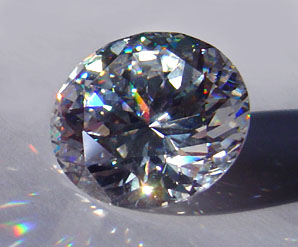
Cubic Zirconia - Too Perfect To Be A Diamond

The beginnings of cubic zirconia started when scientists were looking for less expensive material for use in lasers and optical equipment. Cubic zirconia appears in nature, but it is very rare and the crystals are too small to be of use. Scientists in France, and finally Soviet Russia found the breakthroughs that led to the methods of growing larger crystals in the laboratory. Production of the crystals began in 1976, and by 1980 world-wide production reached 50 million carats. It is used in the manufacture of optical components (prisms, lenses, etc.), insulators, medical instruments (scalpels) and jewelry.
  • The use of CZ (as it is usually abbreviated) in jewelry began almost immediately after it was being mass produced. It is similar to diamond, optically so close that only a trained eye can tell the difference. A comparison of the two substances:
  • On the Mohs scale of hardness, diamond is the hardest substance known with a rating of 10. CZ rates from 8.5 to 9.
  • CZ is virtually flawless, while even the best of diamonds have minor flaws.
  • Pure CZ is colorless. Only the most rare diamonds are colorless.
  • The facet shapes of CZ are different than diamond.
  • CZ is heavier than diamond. A CZ stone compared to the same size diamond weighs 1.7 times more.
  • CZ is one of the most efficient thermal insulators known, while diamond is one of the best thermal conductors. This difference is one of the tests to differentiate diamond from CZ.
Cubic zirconia is not only used as a simulated diamond but can be colored to match practically any gemstone in appearance A reputable seller of jewelry will always tell when CZ is used in jewelry and not try to pass it off as genuine diamond. It is a beautiful stone in its own right. It is less expensive than a diamond, and can give the wearer much pleasure, and at least a very good approximation of what an authentic diamond is. But the cubic zirconia's man-made perfect appearance tells the tale. In all things beautiful, there is nothing quite like the imperfect beauty created by nature. Beautiful and versatile it may be, but cubic zirconia is too perfect to be a diamond.

Sunday, April 25, 2021

Mother Of Pearl - Opal Of The Sea

Mother of pearl is the iridescent substance called nacre, found on the inside of some mollusks. The word nacre comes from the Arab word naqqarah which means shell. It has been used for ornament, decoration and jewelry since 3000 B.C.E. Tombs have been discovered on the sites of ancient Mesopotamia in the Middle East that contained items made of mother of pearl. In some ancient cultures it was valued more than pearls. Before the 19th century, Japanese shell divers would discard any pearls found in the oysters they got, and keep the shell.  Ancient China also used mother of pearl for decorative inlay for various objects and jewelry. The Chinese powdered it and used it in medicines and prescribed it to lower blood pressure, as a cure for dizziness and as a heart medication. Native populations of South and North America also used mother of pearl for decoration and medicine.

In the Middle Ages in Europe, the main source of mother of pearl was the Persian Gulf. By the 16th century, this source had been depleted due to the huge demand. New sources were found in the Pacific. Areas in the Pacific such as The Solomon Islands and Tahiti were then plundered of their supply of nacre producing mollusks until the late 1880's when France gained control of Tahiti and restricted it. By the early 20th century the area was no longer a source of nacre.

In America, mother of pearl had been used mostly as an inlay for furniture until the 19th century saw it used for buttons. Muscatine, Iowa became the center of pearl button manufacture, and 'clammers' fished the Mississippi and other rivers for the nacre producing fresh water mussels. The buttons would be formed by punching out round pieces of the mussel shell. Billions of pearl buttons were manufactured, but they were very labor intensive to produce. By the beginning of World War II, the pearl button industry shifted to the production of plastic buttons as they were less expensive to make.

Mother of pearl continues to be used as decoration for many items such as furniture, musical instruments, and jewelry. Modern mother of pearl comes from fresh water and salt water sources in Europe, Asia, The United States, Japan and Asia. Mother of pearl that comes from abalone shell is some of the most valuable. With its iridescence and beauty, this opal of the sea is still in demand and highly valued.


Thursday, April 22, 2021

Gold - Beauty, Value And Function

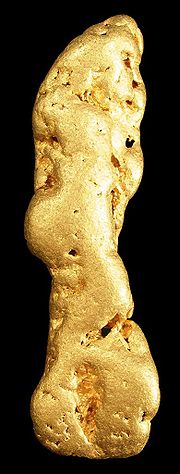
Gold has been treasured by humankind from the dawn of history to today. The beauties of the metal plus its relative scarcity have ensured that gold will most likely retain its value. But it is not only those factors that contribute to its value. Consider these other properties of pure gold:
  • It will not rust, tarnish or corrode.
  • Is the most malleable of any metal. It can be hammered so thin to be almost transparent. An ounce of pure gold can be hammered out to make a 300 square foot sheet.
  • Can be drawn into wire finer than a human hair.
  • Is very soft and easily workable.
  • Has good bonding properties with other metals.
  • Is biologically inactive, and has been used for dental work and other medical applications.
  • Is highly reflective and is used for shielding for outer space equipment.

Gold's applications have touched every part of our lives. Telephones, televisions, computers, medical treatments are just a few examples of the uses of gold. But mention gold, and two things are usually thought of : coins and jewelry.

The value and beauty of the metal are the two attributes that make it a metal for coins. Jewelry also uses these attributes along with other characteristics of the metal. Malleability, ductility, non-tarnishing attributes and gold's ability to bond with other metals also make it one of the preferred metals for fine jewelry.

The fineness, or purity of gold is determined by the karat system. The karat system used for gold differs from the carat system used for diamonds in that diamond carats represents actual weight of the diamond, while gold karats represent the proportion of gold in the item by weight. The following gives karat designations and the percent of gold in each:

10k = 47.3%
12k = 50.00%
14k = 58.33%
18k = 75.00%
22k = 91.67%
24k = 99.99%

Some gold coins can be 24k, but because of the softness of the metal they are more likely to be 21k or 22k, or lower. For jewelry, 21k is the highest purity level for practical use, as anything more than that is too soft.

Alloys of gold used for jewelry contain other metals such as silver, copper, nickel, zinc, and others:
  • Yellow Gold is an alloy of silver, copper or zinc and pure gold.
  • White Gold is an alloy of white metals like silver, palladium and pure gold. It is usually plated with Rhodium to give it a more pure white color.
  • Rose Gold is a gold alloy containing only copper and gold.
  • Green Gold is an alloy containing only silver and gold.
  • Black Hills Gold is an alloy combining copper, silver and gold.
10k gold is the least amount found in jewelry in the United States and most of the world. The higher the karat, the more expensive the jewelry. From the ancients to the moderns, gold still is the most beautiful and precious of metals.
14k Gold Jewelry

Sunday, April 11, 2021

The Many Faces of Quartz

Quartz is the second most abundant mineral in the earth's crust. Pure quartz is colorless, but also occurs in many different colors, from clear to opaque A few examples of the many different kinds:
  • Purple quartz is called amethyst
  • Yellow quartz is called citrine
  • Black quartz is called onyx
  • Brown quartz is called smokey quartz
  • Agate
  • Tiger's Eye
  • Rose quartz
As quartz often occurs as crystals in nature, the ancients held it in high regard. The well-known crystal ball of the fortune teller of old was made from clear quartz. Ancient Romans thought the clear crystals were pieces of fossilized ice. The word crystal comes form the Greek word for ice.

No doubt because of its abundance and crystalline structure, quartz was known as having special properties in many cultures. Ancient Japanese thought that quartz was formed by the breath of a white dragon, and was a symbol of perfection. Indian culture believed quartz could detect food that had spoiled. Quartz played many roles in the rituals of Native Americans. It adorned the temples of the ancient Chinese. In the Middle Ages Christian relics were made from many different members of the quartz family, and like the ancient Greeks, they thought it was fossilized ice.

Rose quartz specifically has long been thought of as a love enhancer, and been highly prized for its mystical attributes. A stone that supposedly will give you improved self worth, and bring comfort to the broken hearted. It was even thought to help prevent wrinkles.

Quartz has also played a role in many scientific and technological advances. Crystals of quartz were used in the first radio transmitters and receivers. It has certain properties when an electrical current is passed through it and it is used in different kinds of meters and gauges. And quartz crystals played a major role in the development of the computer.

Most of the members of the quartz family are used to make jewelry of many types, and are in enough abundance that very nice, inexpensive jewelry is available, as well as higher priced items. No matter the color or type preferred, there is quartz jewelry to fit every taste and budget.

Monday, April 5, 2021

Amethyst - Named By The Ancient Greeks

The purple gemstone amethyst has been treasured by mankind since its discovery, and has been highly desirable by people in positions of authority throughout the ages. Tradition has it that the stone was worn as part of the official robes of ancient Jewish priests and represented the spirit of God. This type of quartz was used in jewelry and crowns of kings and queens of ancient Egypt, royalty of the Middle Ages of Europe, all the way to the present day.

The color of the stone can range from deep violet to pastel purple. The stone is found in various amounts in many places of the world, with most of the amethyst mined in modern times coming from South America. It is the birthstone for the month of February.

Origins Of The Name
The name amethyst comes from the ancient Greek word amethystos that means 'not intoxicated'. In ancient times it was thought that if a person drank alcohol from a cup made from amethyst they would not get drunk. This also led to the sprinkling of ground amethyst into wine to make the drinker immune from alcohol's effects.

These attributes for amethyst in turn derive from ancient Greek stories. One of these stories tells that the Greek god Dionysus was in love with a Greek maiden named Amethystos. She did not return his love, and prayed to the Greek goddess Artemis to protect her and her chastity from the drunken god. The goddess answered the prayer and turned Amethystos into crystals of white quartz. When Dionysus discovered what had happened, he wept for his lost love and poured his goblet of wine over the crystals, thus they were dyed purple.

From ancient Greece to modern times the rich purple hues of amethyst have made it a very popular gemstone. Formerly reserved for the rich and powerful, modern discoveries of large deposits of the stone in South America have made the beautiful stone affordable for more people to own and enjoy.
Amethyst Jewelry

Wednesday, March 31, 2021

Amber - The Gemstone of Millennia

 Gemstones of every color have attracted the eye of men (and women) since the dawn of time. Their attractiveness also made them items of great value. One of the oldest known of these 'pretty rocks' is also one of the few gemstones that have its origins as a substance from a plant. It began as resin that seeped from certain types of trees. In a combination of pressure and chemical changes, the gemstone amber was produced. Amber can be many millions of years old.

Pendants made from amber have been found that date back to 12,000 B.C.E. There have been quantities of amber found in the foundations of ancient buildings, leading to the speculation that it was placed there to ward off evil. Amber has been highly valued throughout history and was one of the first known commercial products. The demand  was so great that a trading route called The Amber Road developed that brought amber from the Baltic Sea all the way to Italy. This trading route lead to the possession of amber in many areas of the ancient world. Amber artifacts have been found in areas of ancient Greece, Egypt and England.

When the resin seeped from ancient trees so many millions of years go, sometimes it would trap various objects within it. These items are called inclusions, and can be a variety of insects, leaves, twigs, and other organic matter. These inclusions can contain insect and plant species that are no longer found on earth, and they add to the value of the stones.

Amber comes in many different colors such as orange, red, yellow, white, green, brown, blue and black (black is merely very dark shades of one of the other colors). It can also range in clarity from clear to cloudy. Seawater Amber, as its name implies, is found either floating in seawater or entangled in beds of seaweed. The beaches and seaweed beds of the Baltic Sea was the greatest source of amber in the ancient world, and was the starting point for the original Amber Road. The stone is also mined on land, and is the greatest source of amber being used today, mined in this manner it is encrusted with other minerals and rocks, while sea amber has been polished smooth by water. Sea Amber is of greater value than the version found on land.

Much of the amber found today still comes from the Baltic Sea region of Eastern Europe and Russia, with many of the richest deposits found in Poland and Lithuania. Other major deposits are also found in The Dominican Republic and different areas of Asia. Small localized areas of amber deposits have been found in The United States, with the largest U.S deposits being found in Arkansas.

The ancients credited amber with many magical properties. It gave the wearer strength, helped ward off evil, aided in healing, and enhanced the power of magicians, among others. The beauty of the stone still has the power to attract the human eye, and amber jewelry remains very popular. A thing of beauty is a joy forever, said the poet. In its many colors and forms, amber was a thing of beauty for the ancients. It remains a thing of beauty for us.

Amber Jewelry 


Saturday, March 27, 2021

Tanzanite - Gemstone Of The 20th Century

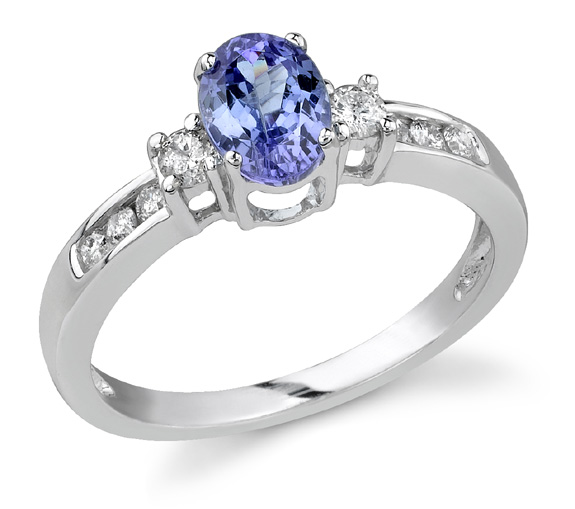
Most gemstones have been known about for centuries, some for  millenia, so there is rich folk lore and tradition surrounding most of them.  The exception is Tanzanite, which was first discovered in 1967 near mount Kilimanjaro in Tanzania. It is the only place where the gemstone is found, and it is named after the country in Africa where it is found.

It was first marketed by Tiffany and Company in New York City.  It was first given the name blue zoisite as it is a variety of the mineral zoisite, but Tiffany changed it to Tanzanite because they thought it would help it sell better.  For ten years Tiffany had the exclusive rights to the stone, but in the 1970's the Tanzania government nationalized the mines, and now the government restricts the export of rough Tanzanite stones.  There are other entities that own parts of the mines and the supply of the gemstone is strictly controlled, thus the price has rose steadily over the years.

The color of Tanzanite can range from purple to blue. The rough stone is usually a reddish brown, and the rough stones are heat-treated to bring out the blue color. Almost all Tanzanite is heat treated at more than 900 degrees Farenheit and heat treatment has no affect on the value of the stone. The best quality stones range in color from ultramarine blue to sapphire blue with the most popular color being saturated blue which shows a purplish tint to it. It is a relatively soft stone,  and scratches more easily than many other gemstones. Care in wearing it and cleaning it is required.  In 2002 The American Gem Trade Association announced the Tanzanite has joined Turquoise and Blue Topaz as their birth stones for December.

Tanzanite has a rare property not found in most gems. When looked at in different light and at different angles it can appear to change color. From blue to violet to purple, some stones even show the colors dark red and gray. Tanzanite is usually clear with few inclusions. Stones with cracks or bubbles should be avoided as these could break.

Tanzanite is a beautiful stone, and considering it is found in only one 5-mile square place on earth, it is by its nature a rare gem that will only get rarer.  But it continues to be a popular stone, and has made its mark in the world of gemstones in a very short time.
Tanzanite Jewelry

Wednesday, November 17, 2010

Marcasite - Pyrite in Disguise

Marcasite as the word is used in jewelry refers to small faceted stones that are inlaid in sterling silver. But the actual mineral marcasite cannot be used in jewelry as it tends to crumble into powder. Marcasite jewelry is actually jewelry using the mineral pyrite, sometimes referred to as iron pyrite.

Pyrite as it occurs in nature has a metallic luster, and can range from a very pale to a brassy yellow color according to the sulfur content. The yellow colored pyrite was mistaken for gold by inexperienced miners and earned the name fool's gold. These miners of years ago didn't realize it at the time, but pyrite can actually have very small amounts of gold in it. The sulfur content of the mineral has led pyrite to be used commercially for the production of sulfur dioxide used in the paper industry, and sulfuric acid for many industrial applications. Pyrite is found in many areas around the world

Pyrite used in jewelry is called marcasite. The name is derived from the Arabic word for pyrite, 'markaschatsa'. Evidence of this type of jewelry has been found in areas of ancient Greece and the burial grounds of the ancient Inca people of South America. It became very popular in the 18th century, reaching its zenith in the Victorian Era.

Marcasite is most often used with sterling silver. The darkness of it makes a good contrast to the brightness of silver. Gemstones are also used with it to good effect. Even when new, it has an antique look to it, and is used in Victorian Era jewelry reproductions. It is also used in many other kinds of jewelry. It can range in color from slightly brassy to pale green, but is mostly a dark metallic gray color.

From a simple marcasite and sterling silver ring, to ornate pendants with brightly colored gemstones, it is a very versatile material. This type of jewelry is found in very affordable jewelry right on up to very expensive. It has its own charm and beauty, this pyrite in disguise.


Tuesday, November 16, 2010

Black Hills Gold - America's Jewelry

In the 19th century, The Black Hills of South Dakota was an untamed area held sacred by The Sioux Native Americans. White men knew nothing about it when George Armstrong Custer led the first expeditionary force there in 1874. This expedition was a violation of a peace treaty with the Sioux, a violation that the Sioux never forgot. They exacted their revenge on Custer at The Battle Of Little Big Horn in Montana two years later.
A few months after the expedition had entered the area, a man name Horatio Ross discovered gold along French Creek. The lure of gold has the power to lure men to pursue it no matter where it may lead them. The gold found at French Creek had the same effect, and led to one of the last great gold rushes of the west. The town of Deadwood was a gold rush town, with all that goes with it. Prospectors, saloons, gambling, violence, and famous people. Wild Bill Hickok was shot to death in a saloon in Deadwood as he played poker. His card hand contained a pair of aces and a pair of eights, ever since known as the Dead Man's Hand.

The man that has been called the father of Black Hills Gold, S.T.Butler, also lived in Deadwood. His jewelry design of the colored leaf so often seen in this type of jewelry may have originated in San Francisco during the gold rush of 1849. Black Hills Gold designs also use grapes and grape stems as well as the leaves. The different colors used in the jewelry are alloys of gold. To obtain the green hue, silver is alloyed with yellow gold. Copper is alloyed with yellow gold in differing mixes to obtain red or pink gold.

While it is true that in the 1980's a federal judge ruled that any gold called Black Hills Gold must be manufactured in the Black Hills, this does not mean that the gold itself has to be from it. Makers purchase their gold from many sources, and as long as the jewelry is made, it is legal to use the name.

Black Hills gold begins with ingots of gold, silver and copper. These are melted and combined to make the different karat alloys used and different colors, then formed into gold bars. Some of these gold bars are then rolled to various thicknesses according to the needs of the jewelry being made, then they are stamped using patterns and dies. Other gold bars are used to cast the base of the piece of jewelry.

Cast pieces are polished, then the pressed gold items are hand soldered to the jewelry base. After further hand work, polishing and many inspections, a high quality piece of Black Hills Gold jewelry is the result. This type of jewelry is known for its high quality, beauty and value. It remains a popular type of jewelry that is not only very pleasing to the eye. It is a uniquely American form of the jeweler's art.


Monday, November 15, 2010

Birthstones - The Modern List

There have been many different lists of stones that correspond with the months or signs of the zodiac. The most recent one is a list that was adopted by the American National Association of Jewelers in 1912. This is the official list of birthstones used in the United States. Not only are certain stones associated with a given month, but each month has a color associated with it. These colors have been derived from the natural color of the individual birthstones. Following is the modern list of gemstones and corresponding colors:
  • January - Garnet gemstone, deep red color. Although garnet is most often thought of as being a red stone, garnet occurs in every color except blue. Each color of garnet technically has its own name.
  • February - Amethyst gemstone, purple color. Amethyst is one of the most popular gemstones and is worn by many regardless of their birth month. Amethyst is the purple variety of quartz.
  • March - Aquamarine gemstone, pale blue color. Aquamarine is a member of the beryl family of gems, along with emerald.
  • April - Diamond gemstone, white or clear color. There is nothing else like the sparkle and fire of a good quality diamond in the world of gems.
  • May - Emerald gemstone, green color. Emeralds are found in many countries, with Columbia and Brazil producing some of the finest stones.
  • June - Pearl or Moonstone, white color. Pearls are the only gems that come from living creatures.
  • July - Ruby gemstone, red color. Ruby and Sapphire are types of the mineral corundum. The only gemstone harder than a ruby or sapphire is a diamond.
  • August - Peridot gemstone, pale green color. Peridot occurs in many areas of the world, and is also occasionally found in meteorites.
  • September - Sapphire gemstone, deep blue color. Sapphire occurs in nature in many different colors besides blue, but the blue stone is associated with September.
  • October - Opal gemstone, multi-colors or pink. There are two types of opals, precious and common. Precious opals are the stones that display the 'fire' or play of colors the stone is famous for.
  • November - Yellow topaz or Citrine gemstones, yellow color. Yellow topaz of good quality is relatively rare and expensive. Citrine is often substituted.
  • December - Blue topaz or turquoise gemstones, blue color. Blue topaz is sometimes irradiated to improve and deepen the blue color. Tanzanite was added to the December birthstone selections by the American Gem Trade Association in 2002.

Sapphire - Not Only In Blue

Sapphire has been a stone that represented virtue, holiness and wisdom throughout the ages. There is a tradition that says that the tablets the 10 Commandments were written on were tablets of sapphire that were so strong that a hammer would shatter if struck against them. Blue Sapphire became the favorite of church authorities for rings, as the blue color represented the sky. The gem was worn by ancient kings as a defense from harm and especially as protection from poisoning. It was also a favored stone by those who practiced witchcraft.

Sapphire is the name given to any piece of the mineral corundum that is not red in color. All red corundum is ruby. It is usually thought of as being blue in color and that is the most popular color. But they are found in a range of colors such as green, purple, orange, pink, violet and colorless. It is the birthstone for the month of September. There are many areas of the world that produce the gem, but the most famous are Sri Lanka, Burma and Kashmir, which is located high in the Himalayan mountains.

Sapphire like ruby can be produced synthetically by growing in laboratories and is very difficult to differentiate from the authentic stone. Synthetic sapphire has industrial applications similar to ruby because of its hardness, and is also used in jewelry. The synthetic stone is available in many colors besides blue and are much more affordable than authentic stones, but they should always be designated as synthetic or lab grown.

The Star Sapphire is a stone in which a six-pointed star can be seen in the stone after it has been cut and faceted. This star moves with the source of light that passes through it. This type of stone was thought to protect the wearer from the 'evil eye' and witchcraft, and is also known as an asteria stone. Sir Richard Francis Burton, famed 19th century traveler obtained one of these stones on his world travels and considered it his good luck talisman. This stone is known as The Star Of India and now resides in the Morgan-Tiffany Collection in the American Museum Of Natural History. It weighs an astounding 563 carats!

The rarest and most valuable type of sapphire is the padparadscha. It is colored in light shades of pink and orange, and most of this type comes from Sri Lanka. According to size, color and quality of the stone, these types of stones can range in price from $4,000 to $20,000 a carat. The most famous padparadscha sapphire is also located in the Morgan-Tiffany Collection of the American Museum Of Natural History and weighs 100.18 carats.


Garnet - The Light Of Noah

The use of garnet, the birthstone for January, has been documented as far back as the Ancient Egyptians. They not only made talismans and jewelry from the stone, but buried it with their dead for protection and illumination on their journey after life. In the bible, Noah is said to have used garnet to guide his path and give light inside the ark.

Garnet is most often associated with the color red, but it is actually a gem that can occur in orange, yellow, purple, brown, black, pink and colorless. These other colors have specific names, but all of them are of the same family. The stone was thought to not occur in the color of blue, but in the 1990's a blue garnet was discovered in Madagascar. These blue garnets are very rare and the most expensive of all garnets. The name of the gemstone comes from the Latin granatum which means seed or grain, specifically the seed of the pomegranate which is also red in color. Garnet was occasionally mistaken for ruby throughout history, because of the similarity in appearance and the characteristic of some garnets to change colors when viewed in different light.

The ancient attributes for garnet include giving of strength, healing, relief for skin inflammation, regulating blood flow and curing depression. The stones were also in ancient times given as gifts. When friends exchanged garnets, it demonstrated their affection for one another.

The stone is primarily used in jewelry in modern times, but its hardness has also given it use in industrial applications. Although much more expensive than sand, garnet is sometimes used to blast clean items as it is much more efficient than sand. It can also be recovered and recycled in this process.

Garnet is found in many areas of the world, with some areas better known for colors of the stone besides red. Garnet is found in The United States in Idaho, New Mexico, Utah and Arkansas, in Russia, Africa Sri Lanka, Europe and South America.


Diamonds - History And Facts

Some history and facts about the world's most popular gemstone:
  • Diamonds are carbon, the same substance as charcoal, with the difference being in the way the carbon atoms are structured.
  • Diamond is the hardest substance known that occurs naturally. There are other substances that are harder that have been synthetically created. Ultra hard Fullerite and Aggregated Diamond Nanorods are 1.17-1.52 times harder than diamond.
  • Historians speculate that diamonds may have been known as far back in history as the 12th century B.C.E. Diamonds are mentioned in the Bible,
  • Practically all diamonds came from India before 1725, when they were discovered in Brazil.
  • India and Brazil supplied diamonds to the world until they were discovered in South Africa in 1866. South Africa remains one of the most important sources of diamond s today.
  • Diamonds at one time were extremely rare. Only the very wealthy could afford to own them.
  • A diamond mine in Murfeesborough, Arkansas operated until 1969. The mine is now part of a state park where for $5 visitors can dig for diamonds and keep all they find. The odds of finding a diamond there are very small.
  • There is only one currently operating diamond mine in The United States. It is the State Line Kimberlite District located near the Colorado-Wyoming border. There are a few diamond mines in Canada, mainly in the Northwest Territories that are operational.
  • Much of the popularity of diamonds can be attributed to the marketing strategy of the De Beers diamond company. This company is involved in the exploration and mining of diamonds, and accounts for approximately 40 percent of the diamonds on the market.
  • Today there are more synthetic diamonds being manufactured than mined. These diamonds are for industrial use. Gemstone quality synthetic diamonds have been made, but are more expensive to make than to mine for natural ones.
  • All diamonds that occur naturally are colored. Pure diamond is colorless, but pure diamond is not found in nature. Finer quality diamonds may appear colorless, but they too have color even if it is almost imperceptible.

Opal - The Queen Of Gems

The birthstone for October, opal was highly prized in ancient Rome and considered to be a gem of hope and healing. Ancient Arab cultures thought that opals fell from the sky during flashes of lightning. It can occur in many different colors, along with colorless. Seldom is a stone only one color. Shakespeare in one of his plays describes the stone as being 'the queen of gems'.

There are many theories as to how the stone got its name. The Sanskrit word upala, meaning valuable stone is one theory. Some scholars say it came from the Greek word opallios which means color change. Others say that the ancient Romans called it opalus, which means stone of many elements.

There are two different types of the stone. Precious opal which is a stone that has the play of light characteristic, and common opal which does not. Play of light means that reflected and refracted light in many colors can be seen in the stone when viewed from different angles, colors that are different from the main color of the stone. Most gemstones are precious opal but the common type can also on occasion be of gemstone quality. Up until the middle of the 19th century, precious opals were very rare and most were found in what is now Slovenia in Europe. It is now found in Australia and Czech Republic, Hungary, North, South and Central America, and Northern Africa as well as Slovenia.

Not all opals used in jewelry are solid gemstones. Doublets are thin pieces of opal that are fastened to a backing material, while triplets are thin pieces of stone that are attached to a backing material that have a clear quartz cap. There are also synthetic opals being manufactured that are indistinguishable from natural stones except by trained gemologists.

Compared to other gemstones, opal is fragile. Its softness makes it susceptible to damage if not worn with care. It is also a gem that is made up of 3 to 6 percent water. If the stone is exposed to conditions that would dehydrate it, cracks can occur as well as the loss of the play of light. An opal should be worn often to allow the stone to retain its moisture by contact with the air and human skin, and should be mounted in such a way as to give it protection.

There is a great price variation with opals, with the common variety usually much less expensive than the precious. The most expensive precious type of stone is the black opal, which refers to a stone that has a dark main color, and very brilliant flashes. Because precious opal can reflect so many different colors, it can be stylish and match many different types and colors of apparel. As long as care is taken when worn, opal can be worn and enjoyed every day.


Gold Plating - From Thin To Vermeil

Gold has been and continues to be a highly desirable metal. Whether for its beauty in jewelry, or value in coins and bullion, solid gold is very expensive and the price is climbing. The expense of gold naturally limits the number of people who can own it. But gold has been used in other ways that can utilize the beauty of it without the incredible expense of solid gold.

Gilding is used to cover large areas with a thin layer of gold. Gold hammered into very thin sheets called 'gold 'leaf' is attached with adhesives. Gilding is also done with gold dust mixed into a paste with other substances. Items are also covered with thicker sheets of gold by hammering and forming it around the item. This is called gold rolled. With the application of heat and pressure, gold sheets are fused to the object. This is known as gold filled. But the most used process, especially for intricate jewelry, is gold electroplating.

Commercial applications for the electroplating of gold and silver began in the early 19th century. Simply put, electroplating works by immersing a metal object into a solution that has microscopic particles of gold suspended within it. A small electric charge is run through the metal object, and the particles of gold are 'attracted' to the object and bond with it. This very thin layer of gold can vary in thickness, and is measured in millionths of an inch, or micro inches . Most common gold plated objects have a coating that is 7 to 20 micro inches, and can be 10 to 14k gold.

Vermeil (pronounced 'vermay') gold is a much thicker layer that is at least 100 micro inches thick. Vermeil gold jewelry is much more durable than regular gold plated jewelry, where the coating is so thin that it is easily worn off. Regular gold plated jewelry is usually done over lesser metals such as brass. Vermeil gold jewelry is always at least 14k gold and is done over sterling silver. It is very high quality, and has the beauty of gold without the high price of solid gold.


Bracelets - Fact And Folklore

Where did the name 'bracelet' come from? What is the most expensive bracelet worth? Facts and folklore about bracelets:
  • The first known bracelets were worn by Sumerians who lived in Mesopotamia (modern day Iraq) around 2500 B.C.E. Jewelry of all kinds was a sign of a person's prosperity. Bracelets and other jewelry were found in the royal tombs in the ancient city of Ur in Mesopotamia. It was customary for jewelry to be buried with their owners, along with their servants. Servants probably prayed to their ancient gods for a long life for their masters because of this.
  • The charm bracelet was thought to have originated in ancient Egypt during the age of the pharaohs. Charms made of precious metals and gemstones would be worn on these bracelets to ward off evil spirits. These were known as Lucky Charms long before the breakfast cereal came into existence.
  • In ancient Greece, men and soldiers wore bands of leather on their forearms for protection. Sometimes these bands were decorated with precious metals and gemstones. They were known as Bracels, derived from the Latin word Brachium, which meant 'arm'. Ladies were not about to be outdone by men, and so they adopted the 'fashion' and wore smaller versions of them, called little bracels, or bracel-ets. At least that's the story I heard.
  • Bracelets made of copper are thought by some to aid in relieving the pain of arthritis. The body absorbs the copper and somehow relieves the pain. This has not been proven but people being people still wear copper bracelets, for fashion if not for pain relief. But don't copper bracelets turn some people's wrists green? Maybe it's all part of the fashion statement.
  • Unlike other forms of jewelry, they have always been in vogue throughout recorded history, and been worn by men and women. The concept of unisex jewelry is older than people think.
  • They are not only worn for decoration. Hospitals use them for positive patient identification, people with medical conditions wear Medical Alert bracelets. There are also bracelets made of silicone rubber that were originally used in sports, but are now also used as 'awareness' bracelets for many different causes.
  • The most expensive bracelet in the world? This is not only a bracelet, but a wrist watch too. A jewelry manufacturer in Switzerland named Chopard wins the most expensive category hands down with a bracelet/wrist watch with over 200 carats of white and colored diamonds. The price tag? A paltry $25 million.

Pearls - Legend And History

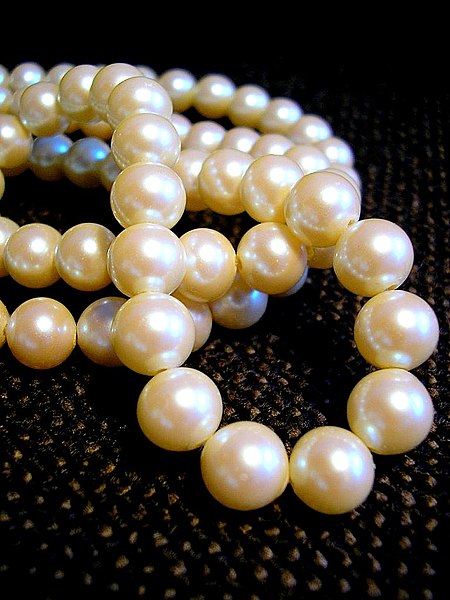
Pearls are one of the oldest types of gems, and continue to be popular today. Some legends and history about pearls:
  • The oldest surviving piece of pearl jewelry is a necklace that was found buried with a Persian Princess. It is estimated to be over 2000 years old.
  • Historians believe pearls were worn in ancient Middle East and Asian societies 3500 years ago.
  • They were highly regarded in ancient Rome and very valuable. A Roman general reportedly sold one pearl earring and financed an entire military campaign with the earnings.
  • Legend has it that Cleopatra, Queen of Egypt, dissolved a pearl in wine and drank it to prove her love for the Roman Marc Antony.
  • The Bible refers to pearls several times.
  • The ancient Greeks valued them not only for their beauty, but for their associations with love and marriage.
  • The Medieval world valued them and they were worn not only by women but by knights going to battle. These knights believed that pearls could protect them from harm.
  • In Renaissance Europe, several countries passed laws forbidding anyone but the nobility to wear pearls or have them in their possession.
  • The ancient Inca and Aztec cultures valued them for their beauty and magical powers.
  • Native American men and women of the Atlantic coast and Mississippi river region wore freshwater pearl pendants and earrings.
  • The discovery of pearls in the waters off Central America brought great wealth to Europe during the years of expansion. The 'pearl rush ' was so great that practically all of the American pearl oyster population was gone by the end of the 17th century.
  • Famous French jeweler Jacques Cartier traded two pearl necklaces for valuable property on New York's famous Fifth Avenue, and built his famous jewelry store there in 1916.
  • Pearls remained very expensive and only the very wealthy could afford them until the early 20th century when pearl cultivation began.

Friday, November 12, 2010

Rhinestones - The Great Diamond Imitators

What is usually thought of when the word 'rhinestone' is heard? A piece of cheap jewelry, a deceased piano player that wore clothes dripping with the glittering stones, or the song 'Rhinestone Cowboy.' Most of the common associations with the name imply cheapness, bad taste, gaudy, right on down the list of negatives. But rhinestones have a long and varied history that tells otherwise.

The name 'rhinestone' comes from the pebbles of rock crystal found centuries ago in and near the Rhine river of Europe. These natural crystals and other man-made pieces of highly refined glass were laboriously hand cut and ground., and were very expensive. About 1775 a French jeweler by the name of Stras had the idea of coating the back of these pieces of glass with metal powder to improve their luster. The result was a good imitation of a diamond, but these stones were still handcrafted and very expensive.

In 1892 a son of a Bohemian gem cutter by the name of Daniel Swarovski invented a mechanical gem cutting machine that was capable of very fine, precision work. Three years later Swarovski moved to Austria and began running his water-powered crystal stone cutting factory. The result was high quality stones produced at a fraction of the cost. Thus the rhinestone's role as a quality, low cost alternative to the diamond in the jewelry making industry increased.

Swarovski continued innovating the rhinestone industry by devising a vacuum method of fusing gold and silver on the back of rhinestones that created an even more brilliant luster. Swarovski crystal is still the highest quality rhinestone in the jewelry business today.

Modern rhinestones are not only made from glass, but from plastics and acrylics of various formulas. The inexpensiveness of some modern rhinestones has allowed them to be used in every kind of application, from dog collars to baseball caps. But the beauty of a well-made rhinestone can lend itself to fine pieces of jewelry that are much more affordable than jewelry made from genuine diamonds. The above-mentioned piano player with a love of rhinestones was of course Liberace. In 1982, Liberace was given a 51 pound, 115,000 carat clear rhinestone from the Swarovski Crystal Company of Austria in appreciation for his being their biggest customer. This rhinestone, worth $50,000 twenty years ago, now resides in the Liberace Museum in Las Vegas, Nevada.

It has been said that imitation is the highest form of flattery. Rhinestones are quite simply imitations of diamonds. Some are cheap imitations, some are high quality imitations. But the great diamond imitator has given something to many people that otherwise would never have had it, a glimpse of the sparkle and beauty of the most valued of gems, the diamond.


Citrine - The Lemon Gemstone

Citrine, a form of quartz similar to amethyst, was one of the most prized gemstones in antiquity because of its rare occurrence in nature. When intense heat is applied to the gemstone amethyst, it is transformed into citrine. This can happen in nature when deposits of amethyst are near a heat source in the earth's crust, but more often heat is applied industrially to create citrine. It can be transparent to translucent, and range in color from light yellow to golden brown. Naturally occurring citrine is usually a pale yellow, while citrine formed industrially is darker in color, with reddish tints.

Citrine gets its name from the old French word citrin, which means lemon. It is a relatively soft gemstone that is easily scratched. It is used in jewelry by itself, or is quite often combined with amethyst, peridot or garnet for contrast. It also compliments diamonds very well. Most natural citrine mined today comes from Brazil, with other deposits found in Russia, France and Madagascar.

This gemstone can be scratched rather easily, and its color will darken when exposed to too much sunlight. This darkening is permanent, so care is needed to keep the gemstone out of excessive amounts of sunlight. It is the birthstone for the month of November.

As most gemstones, Citrine has been attributed many healing and magical powers. Citrine was thought to stimulate the memory, influenced dreams, be a general talisman of protection, aid digestion, and enhance creativity. Also one of its main attributes was the power the stone had to protect against snake venom.

A stone that is readily available and relatively inexpensive, but as with all gemstones the better quality the stone (no matter what type) the higher the value and price. In the world of gemstones Citrine may have gotten its name from the old French word for lemon, but is far from being a 'lemon'. It is a versatile and beautiful stone.